On Disney Princesses

My friend Jan posted a great reflection on the Disney Princess phenomenon today. I too have been hearing about Peggy Orenstein’s book, Cinderella Ate My Daughter. Of course our house was hit by the Disney Princess mania—twice. I’m happy to say we are on the other side of that, though some princess detritus remains in our home, along with a Disney Fairy poster on the girls’ wall. Like most things, I feel OK with the middle ground we sought in that whole deal.

Jan was interested in the fact that the DPs never look at each other in the posters and marketing. Rest assured that the dolls, when in the hands of actual girls, do not remain so segregated. But her post prompts me to share this bit I wrote back when the DP craze was at its most fervent in our house.

Disney Princesses

Disney princesses
have no mothers.
They have dwarfs in a frat-house,
mice in hats,
a tiger, a dragon,
a Jamaican lobster,
and a fairy godmother
oblivious to child-labor laws.

But no mothers.

Let’s swoop in
and do the job:
teach Cinderella to kick down the tower door
or Snow White to sing “heigh ho,”
pack up Belle’s books in heavy trunks
for a semester of study abroad, where
she’ll room with Jasmine.
Help Ariel keep her voice.
Who knows? They might still live
happily ever after; they might even look
in that mirror mirror on the wall
and see the ones they love most.

In Memory of Dad

Today is the 25th anniversary of the Challenger disaster, and the eighth anniversary of my dad’s death. This Tuesday is the anniversary of the Columbia disaster, which occurred on the same day as dad’s memorial services. There were two gatherings, one in Houston and one for me, great with child, in Atlanta.

I’ve tinkered with this poem for years. This is the current form.

Relics: A Diary

January 28
As the phone call ended downstairs
I folded down a corner of the Secret Garden,
perched it atop a stack of books, way too optimistic
for the fortieth week, and turned
toward the door to my husband’s
ashen face—
I turned toward the door, the door,
the door beyond which
there be dragons, as the mapmakers used to say
with their quills poised over a tattered void.

February 1
While the family gathered
four states away,
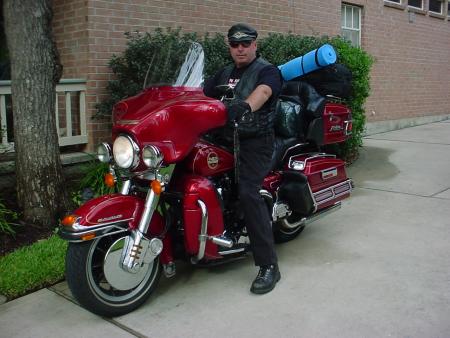
filed past his red motorcycle loitering
at the church steps,
I placed a picture on a low table,
exhaled into a chapel, and sat down creaking front.
And people who didn’t know him,
but who knew me, loved me (loved me! loved me?)
filled in respectful rows,
heard how he made French toast and adored
Alice’s Restaurant,
stood at table
tore bread
fumbled a hug
and left.
And debris rained over a Texas plain.

February 12
In dreams, at least,
a gleaming new child
met a confused old wanderer.
There, she said, pointing behind her,
to forever, to Goodness,
that’s the way you’re looking for.

All right then, he said,
lifted her,
cradled her for an eternal instant,
then twirled her around to the path he’d completed
and wished her luck and love.


Travelogue Part VII: Barcelona

This month marks 10 years since the big Columbia Seminary Jan Term in Geneva. A couple dozen of us went that year, along with a group of DMin students. It was a spectacular trip and thanks to that experience, I still get the urge to travel each January. Several years ago I wrote some memories of the experience. I’m posting them this week in the hopes that it will inspire some of the other Geneva folks to reminisce as well.

This post begs for pictures, but I don’t have any that are scanned. Use your imagination…

Part VII: Barcelona
We had a free weekend during our stint in Geneva, so a bunch of us decided to take a Friday-night train to Barcelona. Thankfully, the Barcelona train was much nicer than the jalopy we had taken to Florence, so we got a decent night’s sleep.

Remember at the beginning of The Wizard of Oz when Dorothy’s house lands with a bump, but she doesn’t know anything is different until she throws the door open and all that Technicolor floods in? After weeks in misty Munich, Florence and Geneva, we pulled into Barcelona with a bump, and because we went directly from train station to city subway, we didn’t know anything was different either. It was not until we were riding the escalator up to street level at our metro stop that we realized we had arrived in Oz.

Blue sky and a farmer’s market, with endless displays crammed with fruits, vegetables and flowers. That was our first glimpse of Barcelona.

Most of us were running out of money by this point, but I found a couple of rooms near the town center that ran each of us about $15US a night. It cracked us up to be spending so little. We were giddy with the bargain for a week afterwards. Was it safe? Well, it was down a secluded alley, and the locksbasically worked, but we all survived. Was it clean? Let’s just say I wore socks in the shower. Who cared?

Barcelona is an easy place to be a tourist. There are two tour routes with continuous bus service all day, so you can do an entire loop at once and get an overview of the city, or you can hop off some place that interests you and stay at that particular site as long as you want.

To be honest, I can’t remember half the places we visited.

I do remember the Picasso museum. And I remember lots of buildings designed by Antoni Gaudi—they’re interesting. They look like they’re melting. The Sagrada Familia temple is the most famous and enormous example of Gaudi’s work; it has been in various levels of construction since 1882. I guess that’s not unheard of—the old cathedrals were built over decades, even centuries—but there’s something unsettling about this huge monstrosity standing unfinished for 120 years in the heart of a modern city. It’s the architectural equivalent of the 10,000 Year Clock; it violates our sense of time. Shouldn’t it be done by now? Maybe, but it’s not. [Edit: it wasn't then but it is now!] And someday we will be gone, and construction will continue, and cities will continue, and the world will continue.

The tourist attractions were interesting, but my most vivid memory of Barcelona was the color blue—the blue of a cloudless sky, which I’d been walking around underneath all day, and the blue of the Mediterranean Sea, which knocked me right out. We took a tram up the hillside on the edge of town, and there it was, poured out below us, seeping out into a cloudy white horizon.

In the old Crayola box of 64, there was a color called green blue: blue, with green in it. Blue green was the closest color (green with blue in it), but really there was no comparison. They retired green blue in 1990, the idiots. It was always my favorite color. I spent hours looking at it, drawing with it, but I can’t remember ever seeing anything that color in real life, until a tram in Barcelona gave me a glimpse of the green blue of the Mediterranean.

This sea, which carried a man named Paul on three missionary journeys almost two thousand years ago, this sea is a color that I once held in my stubby little hand and drew fanciful pictures with. I don’t know what that means. Maybe nothing.

Travelogue Part VI: Geneva

This month marks 10 years since the big Columbia Seminary Jan Term in Geneva. A couple dozen of us went that year, along with a group of DMin students. It was a spectacular trip and thanks to that experience, I still get the urge to travel each January. Several years ago I wrote some memories of the experience. I’m posting them this week in the hopes that it will inspire some of the other Geneva folks to reminisce as well.

This post begs for pictures, but I don’t have any that are scanned. Use your imagination…

Part VI: Geneva
After two days here, two days there, Geneva is where we got to unpack and live for a while.

We took a day train from Florence to Geneva, meandering around mountain after spectacular mountain. Geneva finally announced itself in quiet glory; we came around a mountain pass, and suddenly Lake Geneva lay shimmering before us. We had arrived.

We stayed at the Cenacle, a beautifully simple retreat center with single rooms, a huge common area, a cool and quiet chapel, and rustic bread and jam for breakfast, and a unisex bathroom and shower. OK, that made for some funny conversations.

We commuted via bus each morning to the World Council of Churches for classes, then spent the afternoons shopping, sight-seeing, hanging out, and occasionally studying.

Geneva is a wonderful city, no doubt about it. Cosmopolitan, bustling, convenient to get around. The John Calvin sites are sure to please even the nerdiest of Presbyterians. We toured Calvin’s church, stood next to Calvin’s pulpit, and took photographs next to Calvin’s immense statue. The church used to be decorated with ornate frescoes, but in a zealous attempt to root out any idolatry in the church, Calvin and his associates had the walls scrubbed clean. There’s one secluded corner where the frescoes still remain, but are barely visible—little ghosts of pre-Reformation worship, lurking in the shadows.

Geneva has scrumptious food. The fondue was first-rate, and the chocolate! Oh, the chocolate. You know Hershey’s Miniatures? The bag of assorted chocolates—Mr. Goodbar, Special Dark, etc.? Imagine bags like that, available in every shop, and filled with chocolate that doesn’t suck.

The class was interesting, too—an introduction to the work of the World Council of Churches, and an opportunity to research a topic relating to global Christianity. My group researched the role of the worldwide church in advocating for an end to apartheid. How does the church witness for change, while acknowledging its complicity in unjust systems? That is always the question.

Geneva is a city with gravitas. It’s the home of the World Council of Churches, but also the United Nations European office, the World Health Organization, the International Red Cross (and its wonderfully moving and informative museum)… and last but not least, a place I never would have visited if I hadn’t been married to a geek, CERN, “the world’s largest particle physics laboratory” according to its website.

But for me, Geneva was all about the Cenacle’s common room. Most seminaries like to harp on the importance of community. Building community, creating community, an inclusive community, a diverse community. Blah blah blah. I lived off campus in seminary, so I sometimes felt separated from the heart of the community; but for me, the common room was community. In one corner sat huge brown couches—the American kind, big and slothful, the kind of couches that eat paperbacks and loose change. There was always someone sitting there, ready to chew the fat. The rest of the room was filled with mismatched tables, usually packed with people playing hearts or spades. Day and night, the place hopped. And when I didn’t feel like hopping, I could retire to my cozy single room, to read, write, or make plans for my free weekend:

Barcelona!

Travelogues Part IV and V: Florence

This month marks 10 years since the big Columbia Seminary Jan Term in Geneva. A couple dozen of us went that year, along with a group of DMin students. It was a spectacular trip and thanks to that experience, I still get the urge to travel each January. Several years ago I wrote some memories of the experience. I’m posting them this week in the hopes that it will inspire some of the other Geneva folks to reminisce as well.

The carousel in Florence

Part IV: The Train
The morning before our Dachau day trip we checked out of our hotel, schlepped down to the train station, bought tickets for travel to Florence, and crammed our bags into oversized lockers. By the time we retrieved our bags and boarded the train, it was several hours later, although it felt like years. I remember being vaguely surprised that my bags were still there. I don’t know why. I guess in a world where Dachau is possible, it seems like a silly leap of faith to believe that people would respect that cheap lock that stands between them and your stuff. Yet there it all was… and we were off to Florence via overnight train.

MaryAnn’s Principle of Jet Lag: The first night in a new time zone is fine. You’re tired because you’ve been up all day (after dozing on the plane all night), and you sleep fine, even though biologically it’s the middle of the afternoon. The second night in a new time zone is the killer. You’re tired but can’t sleep because your body doesn’t know what time it is.

MaryAnn’s Principle of Jet Lag is made worse when you are on a decrepit former East German sleeper train with squeaky brakes and narrow bunks.

I shared a compartment with two other girlfriends and ended up in the top bunk. I had just gotten settled when, from somewhere below me, I heard the following exclamation: “Oh my God is that a human tooth in my bed?!?!”

It wasn’t, but damned if it didn’t look like one. And that pretty much set the tone for the evening.

The train made abrupt, screeching stops all night that slammed me repeatedly against the wall of the train car. I swear, it was like Wile E. Coyote with a Eurail pass. Luckily I was on the side of the sleeping compartment that faced the front of the train; otherwise I surely would have rolled out from behind the blue privacy curtain and plummeted to the floor.

My gals and I didn’t sleep a wink. Unfortunately, each of us thought the others were asleep, so each of us laid there in annoyed isolation (when we weren’t getting smashed into the side of the car). At one point I decided I might as well listen to some music, so I fumbled in the pitch black for my portable CD player and a random CD (again, remember: 2001). The first song on that mystery CD—hand to God—was called, “Sleeping Beauty.” Nothing like a little mocking from the universe.

Florence made up for it though.

Part V: Florence
After the herky-jerky train trip, the time in Florence was effortless. Our hotel rooms overlooked the Duomo. Overlooked. The Duomo. How does that happen to a bunch of broke seminarians, I ask you?

After checking into our rooms, we all napped in the shadow of the enormous cathedral, framed by quaint blue shutters. Afterward, we split up and explored on our own. I relished the time to myself—cradling a cappuccino as I meandered through the piazzas, watching disconterting street mime (is there any other kind of mime?), bartering for a burgundy wool shawl that I adore to this day.

The group got back together for dinner. The hotel had made reservations at a little bistro that provided a family-style feast for us, including gnocchi with marinara, rustic greens, crusty bread, and a variety of desserts. Afterward we found a carousel on a side street, and how could we resist? (See above photo.) We strolled late into the night, along with the rest of the city. The white Christmas lights, still draped across the tops of the narrow walkways, created a canopy of radiant glow.

Why yes, Florence was enchanting, why do you ask?

The next day we visited Michelangelo’s David. It’s housed in an art gallery in town (and what an insult to call this sculpture an “it”). I turned a corner in the gallery and there he was, at the end of a long corridor, and one just… gets pulled toward it. There are no words to describe him, so I shall shut promptly up about that whole thing.

We also visited the ginormous baptistery across from the Duomo. The previous semester we had just finished a class called Baptism and Evangelical Calling, a team-taught monstrosity of a survey course. One professor had talked about how Martin Luther, during times of trial and adversity, would touch his forehead and remind himself of his identity in Christ: “I am baptized.” This reminder would give him courage for the journey. Another professor had later cracked a good-natured joke at another professor’s expense while patting her forehead and rubbing her belly… so yes, there now exists a photo of ten or so ridiculous Americans rubbing our tummies and patting our heads in front of the baptistery’s enormous gilt doors. Here’s one:

The happy surprise of our time there was the parade that came from out of nowhere. We were leaving the Uffizi gallery when we first heard the drums, booming along a dark side street. Men, women and children appeared in medieval costumes, flags flying, trumpets trumpeting. When we saw the three riders on horseback, wearing crowns and carrying small ornate boxes, we remembered—today was January 6! This was an Epiphany parade. We followed the parade to its end, when thousands of balloons were released in front of the immense cathedral.

We were there over January 6, Epiphany, Three Kings’ Day, when the magi arrived from afar and presented gifts to the Christ child. But this time it was we, the travelers, who received the gifts. Florence had been gracious to us, but it was time to move on to Geneva.
Travelogue Part III: Dachau

This month marks 10 years since the big Columbia Seminary Jan Term in Geneva. A couple dozen of us went that year, along with a group of DMin students. It was a spectacular trip and thanks to that experience, I still get the urge to travel each January. Several years ago I wrote some memories of the experience. I’m posting them this week in the hopes that it will inspire some of the other Geneva folks to reminisce as well.

Part III: Dachau

    First they came for the communists,
    and I did not speak out,
    because I was not a communist;
    Then they came for the socialists,
    and I did not speak out,
    because I was not a socialist;
    Then they came for the trade unionists,
    and I did not speak out,
    because I was not a trade unionist;
    Then they came for the Jews,
    and I did not speak out,
    because I was not a Jew;
    Then they came for me,
    and there was no one left to speak out for me.
    -Reverend Martin Niemoller,
    Lutheran pastor and prisoner in Dachau

Would I have spoken out?

I’ve been trying to figure out what to say about Dachau. In a way it feels like a random side trip, a total non-sequitur—a museum of evil amid art galleries and cathedral tours. But we couldn’t not go.

For one thing, the camp was disturbingly easy to get to, which only adds to the horror of it. We took a short train and bus ride from Munich, then ambled down a pleasant side street, and there it was—a guard tower, squat, stupid and square, but tall enough for its purpose. I was not prepared to see the camp wedged right into the town itself.

How could such a place have existed in plain sight of so many?

The concentration camp site includes many of the original structures of course, but also a number of religious memorials, rich with symbolism, as well as a Carmelite convent. One of the former guard towers is now the entrance to the convent. A witness. A testimony: light out of darkness. Stubborn, defiant people of faith.

We say, “Never again.” How do we live it?

There is a vicious angularity to the place. The endless stretch of wire fence. The rebuilt barrack, long and lean, with row upon row of markers marking where other barracks had been. The iron bars on the gate, the spare block lettering on top: Arbeit Macht Frei, Work Makes You Free.

That Arbeit Macht Frei sign? That was someone’s job, to make that sign. Who was he? Did he know its final destination? Did he know what would happen on the other side of it? Did he appreciate the stark irony of prisoners being worked to death in the shadow of those words?

I drifted through the camp, aimless. I walked with the group, I left the group. I visited some places twice, three times. I was inefficient. I wish I could say this was an act of protest against the oppressiveness of all those right angles, but truly, I just felt disoriented.

Dachau is a place of questions, in the end,
questions that swirl over the dusty gravel of the courtyard,
questions that cower in the dank abyss of the Jewish memorial temple,
questions etched on the face of the Statue of the Unknown Prisoner,
questions that get tangled in the crown of thorns atop the Catholic chapel,
questions that hover motionless in Barrack X, the one with the tall chimney, the one tucked behind the trees.
Dachau is a place of questions, so my path followed the curvature of the questions.

In the end, that’s all I have from that day, questions and lamentations, and a few fading pictures.

The other night though, as I was drifting off to sleep, something clicked into place about the experience. It was the secret decoder ring for me, the key to this whole vault of questions in my head. It came to me, quick and sharp as an exclamation point. I fell asleep, relieved.

Whatever it was, it was gone the following morning. Perhaps it’s better that way.

Travelogue Parts I and II: The Trip to Munich

I was wishing a seminary friend a happy birthday over the weekend when I realized that this month marks 10 years since the big Columbia Seminary Jan Term in Geneva. A couple dozen of us went that year, along with a group of DMin students. It was a spectacular trip and thanks to that experience, I still get the urge to travel each January.

Several years ago I wrote some memories of the experience. I’ll post some this week in the hopes that it will inspire some of the other Geneva folks to reminisce as well.

Part I: The Journey
I packed for this trip over a series of days. There’s something very satisfying about the process—culling through huge heaps of clothing, deciding what to live without, squeezing shampoo and Woolite into petite plastic bottles, making room for that special scarf, not because you need it, but because it cheers you. You can’t beat the elegance and simplicity of carrying all of life’s necessities in a few small bags: Everything I need is right here. By the time I left for the airport and three weeks in wintry Europe, I was carrying a carryon roller bag and a duffel. OK, and a backpack. I have some room to improve, but I had much less baggage than some of my companions.

I have my sister-in-law to thank for this, whom I had visited a few weeks before at Christmas. She spent a year in Paris during college, and not only did she provide invaluable packing advice, but she gave my wardrobe the stamp of approval. Especially the shoes. I’m told the shoes are what give Americans away in Europe—clunky, white, and practical to a fault. Mine were comfortable but sleek, and an unremarkable black. I was ready.

Part II: Munich
Pen and Jody were also on the flight to Munich, and were already there when I arrived at the airport. We didn’t have seats together; probably good, we would have talked much too late into the night. I finished my dinner, caught a few minutes of in-flight TV, took a Tylenol PM, and put an eye mask on and ear plugs in, souvenirs from a red-eye flight the year before. I closed my eyes and thought, “I’m too excited to sleep.” My next thought was, “Hey, it’s breakfast.” No time had elapsed. I was like Ripley in the Alien movies.

It wasn’t a good rest of course. After staggering through customs, my friends and I stood in front of the currency exchange and debated: cab or train? cab or train? Cab, and an important travel lesson: Sleep deprived people will carelessly choose the costly option. Forty-five minutes and too many deutschmarks later, our cab dropped us off at the Hotel Jedermann—the Hotel Everybody, a genial, youthful place with an internet connection in the corner of the lobby. (Hey, in 2001 this was pretty novel.) We checked in and met up with our friends who’d arrived the previous day. Lest we be tempted to sleep, they whisked us off to the Marienplatz, where we arrived just in breathless time to check out the town carillon in its noontime dance of whirring and tinkling. Sehr Deutsch!

Our time in Munich was short, a smudge of jet lag and January drizzle.
We took a tour, we visited a museum.
We ate lots of meat.
We walked a lot.
We didn’t speak the language. That part was pleasant, a whole level of cognitive activity shut down. We couldn’t fall into eavesdropping as one can do in a crowd. Even our bus tour was in German. The weekend was one of absorption, of soaking up the little juicy bits, sponge-like, and not needing to do a thing with them: the neon store signs nestled under angled, rust-colored Bavarian roofs; the exhibit of Christmas decorations at the city museum, featuring trees, advent calendars, and figurines of Nikolaus, whom we recognized, and the devilish Krampus, whom we didn’t; the Isar River, grey and meditative in its concrete-reinforced banks; and the tankards of beer with heads floating on top that defy gravity, like a stiff meringue.

My travel companions, all killing time before having to report to Geneva for the start of class, got along great. There was one bout of snoring by a classmate who will remain nameless.

We wandered through cathedrals, because we were seminary students.

We went to the Hofbrauhaus, because we were tourists.

And we went to Dachau, because we had already come this far.

to be continued…

Brown Sugar Shortbread

Last Monday while I was home with Caroline and James (Margaret was on a trip with my mother), I got the urge to make cookies. I grabbed one of our quick recipe cookbooks and found this favorite recipe for brown sugar shortbread. Yes!

This is a great recipe to make with kids because there’s lots of ways for them to be involved. Of course there’s the usual measuring and pouring, but Caroline also liked cutting up the butter into chunks, and James enjoyed running the food processor as we counted eighteen one-second pulses. They both enjoyed pressing down the dough with a flat-bottomed measuring cup. I decided to score the dough myself rather than delegate to Caroline—something told me she would want to make the cookies HUGE. Not that I blame her.

This recipe is super easy, requires simple stuff you probably already have on hand, and is sooooo good.

2/3 cup finely chopped pecans
1 3/4 cup (8 3/4 ounces*) all purpose flour
1 cup packed (7 ounces*) brown sugar
1/4 cup (1 ounce*) confectioners’ sugar, plus more for dusting the cookies
1/2 teaspoon salt
8 tablespoons (1 stick) unsalted butter, chilled, cut into 1/2” pieces

Preheat to 350 degrees. Spray a 10×15 jelly roll pan with cooking spray.

Process the nuts, flour, sugars and salt in a food processor with a steel blade until uniform, about 3 seconds. Sprinkle the butter evenly over the flour mixture and pulse until it resembles coarse cornmeal, about eighteen one-second pulses.

Dump mixture into the pan. Use the flat bottom of a measuring cup to pack the dough into the pan and smooth the surface. Use the back of a knife to mark the dough into [number of squares of your choice].

Bake until deep nutty brown and fragrant, 15-18 minutes, rotating the pan halfway through baking. Use a knife to cut through the shortbread and make individual cookies. Cool the cookies for 10 minutes, then pop them out of the pan and transfer to a wire cooking rack to cool completely. Sprinkle with confectioners’ sugar (we don’t do this-they seem sweet enough to us) and serve.

*Seriously, who measures flour and sugar anymore? Kitchen scale=life improving thing. Especially as the designated dishwasher in our house.

Stuff That’s Enriching My Life Lately… And Might Yours Too

A few light things for Friday—in no particular order. I share them on the off chance they inspire you to try one or more of them yourself… or veer off in your own direction of simple pleasures:

1. Each day I write in my one-sentence journal. This is great for folks who have an impulse to journal more regularly but who feel overwhelmed at the thought. You don’t have to document everything! One sentence a day is plenty. It’s a manageable chunk, it takes very little time, and what fun to go back and read them! In my case though, it’s a three-sentence journal. Each night I write one sentence about each of my kids—something they did or said, a funny or profound thing I noticed, milestones and ordinary moments I’m sure to forget. It’s also served as a good confessional as I write down moments that I blew it with one or more of them…

I’m hopeless with scrapbooking, and even getting digital photos printed and in albums or frames is a once-a-decade affair, but this I can do. Robert’s even stepped in to write for me at least once, and it’s fun to see what he notices that I missed.

2. I’m a little late to the Praying in Color party but I recently bought the books and think this approach has great potential as a spiritual practice. Here’s how it’s done. I took some time the other day to try it out and started with my three favorite subjects, and the people for whom it’s simultaneously easiest and hardest to pray. (see #1) When Caroline came home and saw them she immediately got it and wanted to try praying in color herself. Since then she’s made one for me and one for her Aunt Christina who’s sick with pneumonia. I’m intrigued by the words she chose to doodle around the perimeter of my piece, which included laughter, hope, happiness, and wind. (Wind? I love it, it’s the Spirit.)

Incidentally, I think this has great potential as a meditative practice, even for those who have a different view of God (or no belief in God). It’s a way of getting beyond words and holding people in your heart, or as the Quakers say, “in the light.” And though this hardly needs to be said to those who know me, I have no visual artistic ability or training and this practice really isn’t about that. At all.

3. I made a resolution to write more letters this year—not e-mails, actual letters—and that’s been neat. I think a lot about technology such as Facebook and am more and more aware of its limitations and challenges. I found some fun stationery that was nice, but not so nice that I’d feel pressure to write something “worthy” of the paper. My hope is to write three letters a month. So far I’ve hit my grandparents, whom I supposed would be most likely to remember corresponding in this old-fashioned way… seriously, I feel like Laura Ingalls when I sit down with a pen and paper.

4. This last one is a very ministry-specific thing, but I’ve totally changed the way I do the prayers of the people. I realized I was being way too haphazard about my prayers each Sunday in worship and it was stressing me out. I like praying extemporaneously, but I always felt I was forgetting stuff. I’d be making notes in the 30 minutes before church, checking CNN on my phone going “What happened this week again?” Not very intentional.

As I analyzed this problem and how I could do better, I realized I needed a place to record things that came up during the week. So I’ve created a weekly repeating to-do item called “prayers of the people” (I use Things for Mac/iPhone) and when a big news event happens or a member of the church asks for prayers for a loved one, I jot it down right away. And that list is always with me so stuff isn’t as likely to get lost. I add to it throughout the week and then on Friday I use the list to write a prayer.

I also know there are “chronic” situations that we don’t need to pray for every week, but we need to remember regularly. Now I have a place to record those too.

I imagine this seems very inorganic and hyper-organized to some. There are many ways to go about this pastoral task, and I’m interested in how other clergy do this. But I believe that just as flexibility and spontaneity can be spiritual gifts, organization and planning can be too.

What’s enriching your life lately?